Showing posts with label Landowner Liability Protection. Show all posts

Monday, March 5, 2018

Does State Get A Copy Of Phase 1 Environmental Report?

Does a Phase I Environmental Assessment Report need to be sent to State or EPA?

This is a Frequently Asked Question, along with the similar question, "Does the State or EPA have copies of old Phase 1 ESA reports?"

The simple answer to both is No; performing a Phase 1 Environmental Assessment on a property you intend to purchase or lease is voluntary. It is a risk management step taken to identify contamination issues on the property or nearby properties which can impact both the value and usability of the property. Once completed there is no requirement that the Phase I Environmental Assessment Report be submitted to any government agency, whether or not potential issues are identified.

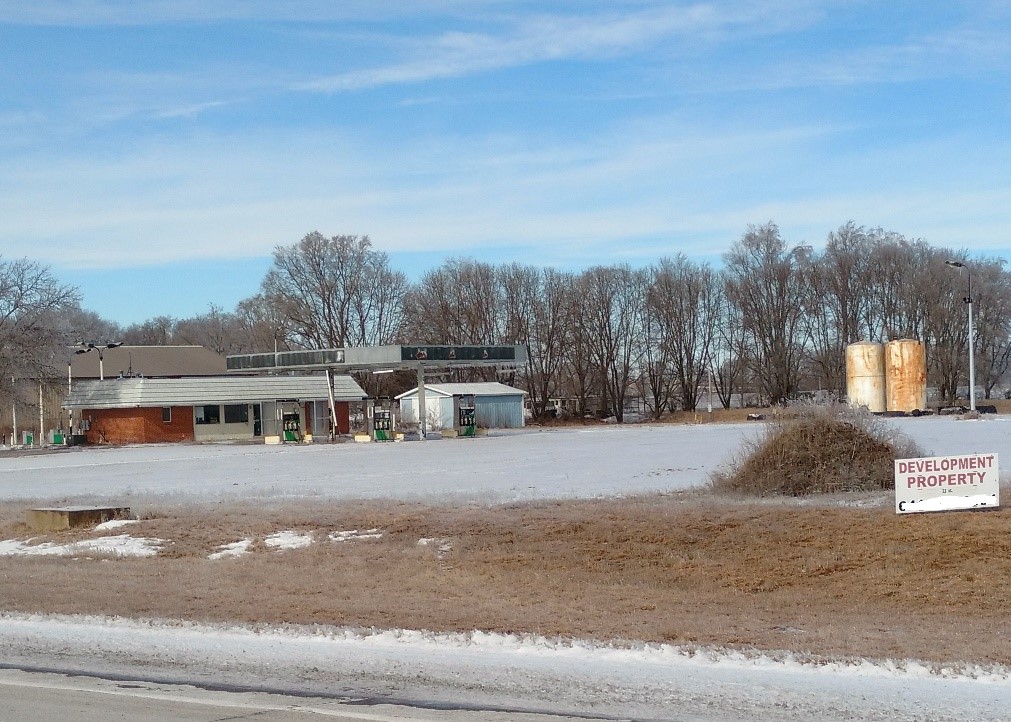
  Abandoned Gas Station and Bulk Fuel Depot Being Sold For Redevelopment
Abandoned Gas Station Being Sold For Redevelopment

 However, if issues are identified on a property for which either the Owner or Buyer wishes to get some type of landowner liability protection (LLP) from the State or Federal agency, then agency will typically require all prior reports be submitted for review, including the Phase 1 Report. This is necessary to document that the party requesting liability protection conducted "All Appropriate Inquiry" and is eligible for the protections being requested. Records of these requests are maintained by the agency and the Phase 1 report(s) can typically be reviewed by formal request.

  More Information On Landowner Liability Protections and AAI


Phase 1 environmental inspections, environmental site assessment, phase 2 testing, site cleanup 
Caltha LLP | Your Environmental Site Assessment 
and Remediation Partner

Sunday, March 4, 2018

Do I Need Environmental Assessment If Paying With Cash?

A Frequently Asked Question Caltha receives is "Do I need a Phase I Environmental if I am not getting a bank loan?".

The simple answer is No; performing a Phase 1 Environmental Assessment on a property you intend to purchase or lease is voluntary. It is a risk management step taken to identify contamination issues on the property or nearby properties which can impact both the value and usability of the property.

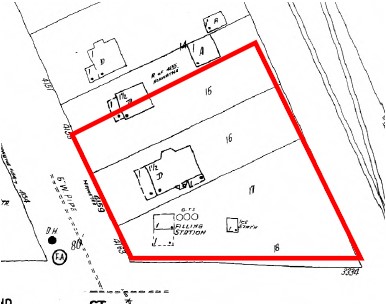
  Historical Map Reveals A Previously Unknown Gas Station On Property
Historical Map Reveals Old Filling Station On Property

The more complete answer is Possibly. The Phase 1 Assessment provides information which can be important to the value of a piece of property, which is not considered in other property valuation assessments. It is important to consider that a Phase 1 may be required in the future, if you use the property as collateral, or if you sell the property and a prospective Buyer uses a bank that would require a Phase 1. If in the future potential issues are identified, you can be responsible for cleanup,even if you did not cause the issue. The advantage of conducting an ESA most often cited is that it can establish you as an "innocent landowner", allowing some protection against this type of liability. Therefore it is better to have this information before purchasing a property.

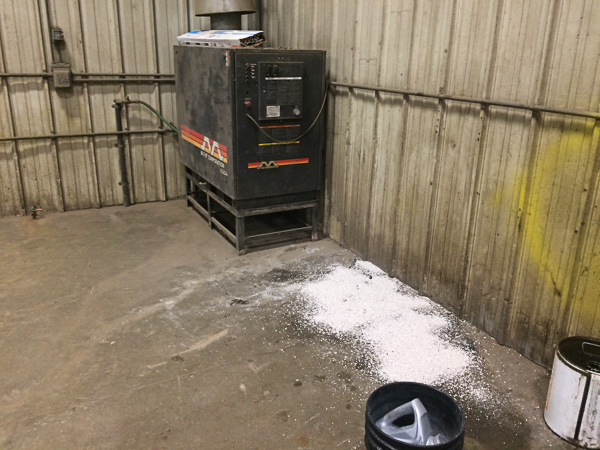
  Oil Staining on floor around Used Oil Burner
Oil Staining At Used Oil Burner

Another tangible benefit of conducting an ESA is the knowledge gained in conducting a formal assessment of a property. This benefit is greatly augmented by adding issues to the ESA that are often outside the scope of a standard ASTM Phase 1. This could include:
  • Describing the manufacturing process
  • Evaluating environmental compliance
  • Identifying potential "bottlenecks" created by permit limits or regulations
  • Considering environmental compliance implications of your future plans for the facility
  • Assessing impacts of upcoming regulations on a facility
  • Understanding the current environmental management system.
  • Evaluating the status of asbestos, lead-based paint and other issues typically excluded from a Phase 1 ESA; this issues are especially important if you intent to demolish and/or renovate existing structures.


Phase 1 environmental inspections, environmental site assessment, phase 2 testing, site cleanup 
Caltha LLP | Your Environmental Site Assessment 
and Remediation Partner

Tuesday, January 2, 2018

Soil - Groundwater Site Investigation of Minnesota Commercial Real Estate

Caltha LLP Project Summary


Project: Phase 2 Site Investigation Prior To Commercial Site Redevelopment
Client: National Retailer 
Location(s):
 Minneapolis - Saint Paul Area, Minnesota

Key Elements: Phase 2 Site investigation, Groundwater sampling, Soil sampling

Overview: Caltha LLP conducted a Phase 2 Limited Site Investigation for this commercial property located in the suburban Minneapolis - Saint Paul Area. A Phase 1 assessment had determined a higher risk for groundwater impacts on the property due to known groundwater contamination at a nearby property. This commercial property located in the Twin Cities Metro Area was previously developed and the prospective purchaser intended to renovate existing buildings and to construct several new buildings on this mixed use site. The results of the investigation determined that low levels of solvents were present in groundwater on the site. The presence of the impacted groundwater was addressed during redevelopment of the site.

Click here for more information on Caltha's Environmental Assessment Services for commercial and industrial property transfer.

Thursday, July 20, 2017

Phase 1 Environmental Assessment For Duluth, Minnesota Historical Industrial Site

Caltha LLP Project Summary

Project: Phase 1 ESA
Client:
Property Owner
Location(s):
Duluth, Minnesota

Key Elements: Phase 1, Environmental Assessment, All Appropriate Inquiry

Overview: Caltha LLP was retained by the property owner to conduct a Phase 1 Environmental Site Assessment for their property located in Duluth, Minnesota. Historical records indicated that the property was in industrial use from at least 1910 through 1970s. The assessment was conducted to meet the requirements of ASTM E-1527-13 and the US EPA All Appropriate Inquiry requirements. The assessment determined based on historical records where past industrial activities and bulk fuel storage occurred on the property.

For more information on Caltha LLP services, go to the Caltha Contact Page

Tuesday, December 20, 2016

Five Things Every Realtor Needs To Know When Representing Contaminated - Potentially-Contaminated Properties

Representing a property with known or potential environmental issues creates special challenges for the commercial real estate professional. This could include properties with old tanks and old spills or leaks - even those that may long ago been have been cleaned up and closed by State agencies.

Although more challenging, such properties can be sold in a reasonable time frame, while minimizing the liabilities of both the Seller and the Buyer. Five key points the real estate professional must keep in mind are :

1 - The Seller "Owns" The Liabilities.

Until the transfer of ownership, the Seller (the current property Owner) owns the environmental liabilities on the property. A prospective Buyer is motivated to identify these liabilities to determine if they could impact the value of the property or restrict their use of the property. In the absence of definitive information, Buyers will tend to over estimate the impact of these potential or actual liabilities, on the value of the property.

2 - Sellers Cannot Control Future Use Or Activities On the Property & Cannot Control A Buyer's Future Risks.

When spills or leaking tanks are discovered on a property, the agency (typically the State) will oversee cleanup, either through enforcement actions or through a voluntary cleanup program. Once the agency determines that any remaining contamination at a site is no longer a significant risk , the agency will "close" the site or issue a "no further action", and allow any remaining contamination to be left in-place. The important point to remember is that this closure is an "as-is, where-is" approval. As long as property use remains the same, and any remaining contamination is left undisturbed, then this closure could be transferred to any future property owners. If a future owner chooses to change the property use, redevelop the property, etc., then the agency may need to be notified and further cleanup may be needed. A seller has no control over future actions on the property which could potentially reopen closed contamination issues.

3 - Plan Ahead For Buyer and Their Lender To Obtain Liability Protections.

If Buyers or their Lender require liability relief letters, such as a no further action or no association letter, you will need to factor in the time required for these issues to be addressed. It is important to remember that agencies will issue these letter only if contamination is actually documented on the property, not simply based on the possibility that contamination could be present. Therefore, in some cases a site investigation needs to be conducted. As an example, a typical scenario might be:2 weeks - Phase 1 Environmental Site Assessment
3-5 weeks - Phase 2 Investigation
1 week - Prepare and submit request to agency
4 weeks - Agency review and issuance of letter Therefore it is not unusual for it to take 10-12 weeks to go through the process.

4 - Buyers and Sellers Must Work Together

For a successful transaction, the Buyer and the Seller must work together. This may mean the Seller granting access to the property for a Phase 1 environmental site assessment and a Phase 2 investigation, if required. The Seller will also need to be involved if contamination is discovered so that proper agency notify occurs. This notification opens up a pathway for the Buyer and their Lender to get liability protection letters from the agency. Likewise, the Buyer will need to communicate all results to the Owner (if the Buyer directed a Phase 2 investigation) to ensure the Seller has the information they need to notify agencies. The Buyer will also want to let the Seller know if they intend to request liability protections from the agency - it is possible that the Seller can also request similar types of liability protections for themselves.

5 - Unfortunately New Issues Can Be Discovered.

One of the most challenging situations is when new contamination issues are uncovered, especially coming from neighboring properties. Leaking tanks and other sources of contamination are newly discovered each year, which can create additional issues which may need to be resolved between the Seller, Buyer, Lenders and the State agency. In addition, over time cleanup standards can change and new information on risks from contamination can "reopen" some closed issues. One example is the current interest in "soil vapor encroachment"; many leaking tank sites that were closed prior to 2010 were not evaluated to determine if contaminants are migrating though soils and into nearby buildings. Although these sites may be closed, they can be reopened to address soil vapors. Therefore, evaluations of soil vapor intrusion have become increasingly common, especially since 2013.


By understanding the process, the real estate professional can play an important role in transforming these formerly contaminated properties into usable and marketable properties, increasing their value and the value of nearby properties.


For more information go to:
Phase 1 Environmental Site Assessment Buyer's Guide
Regulatory Briefing - Landowner Liability Protections and All Appropriate Inquiry
Tuesday, January 8, 2013

SuperFund Liability Protections Extended To Qualified Property Tenants

EPA is extending liability relief for tenants leasing property on brownfields or other contaminated properties, in response to liability concerns raised by developers who wish to participate in an EPA effort to place renewable energy projects on potentially contaminated land. EPA has issued new guidance that broadens a measure passed in a 2002 brownfields statute designed to protect bona fide prospective purchasers (BFPPs) from cleanup liability at contaminated sites, permitting tenants to qualify for BFPP safeguards even if the property owner is not a BFPP.

The protections extended by the guidance are found in section 107(r) of the Comprehensive Environmental Response, Compensation & Liability Act (CERCLA). The new guidance directs EPA to provide the liability protections via the application of enforcement discretion aimed at treating certain tenants as BFPPs under CERCLA. EPA may refuse to exercise enforcement discretion where the lease is designed to allow a landlord or tenant to avoid CERCLA liability or the tenant is liable for reasons beyond its tenant status, such as for arranging for hazardous substance disposal at the site. The amended guidance places greater onus on tenants to satisfy BFPP criteria, especially demonstrating that all disposal of hazardous substances occurred before execution of the lease.

What are BFPP Criteria?

Caltha LLP assists Sellers, prospective Buyers and their Lenders in meeting Due Diligence, Environmental Site Assessment and Environmental Review requirements.
To request a quote on-line, go to Caltha Environmental Assessment Quote Web Page.

For further information contact Caltha LLP at info@calthacompany.com or Caltha LLP Website

Tuesday, December 21, 2010

When Does A Phase 1 Need to Be Updated? Why Update My ESA Report?

Why Update An Environmental Site Assessment Report?

A Phase 1 ESA is a review of current and historic data sources to assess the potential for contamination on a specific property. Overtime, the information available to conduct this assessment increases. Therefore, a property that had no evidence of contamination issues (or "recognized environmental conditions") during a Phase 1 environmental assessment can potentially have significant issues identified in subsequent assessments.

How Often Does A Phase 1 ESA Report Have To Be Updated?

The Standard Method used to conduct Phase 1 environmental assessments (ASTM E 1527-05. Standard Practice for Environmental Site Assessments: Phase 1 Environmental Site Assessment) specifies how often a Phase 1 ESA must be updated to remain valid.

1. After 180 days (6 months) the ESA is no longer valid, and portions of the ESA report must be updated, including conducting on-site inspection.

2. After 1 year, all portions of the ESA report must be updated.

Caltha LLP assists Sellers, prospective Buyers and their Lenders in all States in meeting Due Diligence, Environmental Site Assessment and Environmental Records Search and Risk Assessment requirements. To request a quote on-line, go to Caltha Environmental Assessment Quote Web Page.

For further information contact Caltha LLP at info@calthacompany.com or Caltha LLP Website

Wednesday, August 25, 2010

Phase I ESA Standard Revision - ASTM 1527

The ASTM Standard used to define Phase I Environmental Site Assessments (ASTM E 1517-05) is currently undergoing review and will potentially be revised. An ASTM Task Group has been established to conduct this review. As ASTM E1527 approaches its 2013 sunset date, a task group is currently considering whether the Phase I ESA standard should undergo revisions or be re-approved as-is. In recent weeks, the task group has been considering several legal issues and possible changes to the standard's legal appendix. A few of the issues currently being debated include:

Reliance: Given that SBA requires third party reliance on Phase I ESAs performed on properties guaranteed by there 504 and 7(a) loan programs, should the E1527 standard be revised to include better guidance about who can rely on a Phase I report? This has been a particularly controversial issue, as environmental professionals and their attorneys are concerned about being exposed to additional liability when they perform environmental site assessments.

Oil Pollution Act: The Oil Pollution Act (OPA) was amended in 2004 to include a secured creditor exemption and innocent owner protection provided that an OPA regulation very similar to the CERCLA All Appropriate Inquiry (AAI) rule is met. The task group is considering whether that E1527 standard might be expanded to include OPA, especially since the Coast Guard has already said that E1527 would satisfy these requirements.

Indoor Air Exclusion: Since the revision of the E2600 Standard on Vapor Encroachment, there have been many questions about when indoor air problems should be considered RECs during the Phase I ESA process. While the standard currently lists indoor air as a non-scope considerations, there may be instances when contamination encroaching on a property is both a release on the property and an indoor air problem. The task group is considering whether this should be further clarified within the standard.

Caltha LLP assists Sellers, prospective Buyers and their Lenders in meeting Due Diligence, Environmental Site Assessment and Environmental Review requirements. To request a quote on-line, go to Caltha Environmental Assessment Quote Web Page.

For further information contact Caltha LLP at info@calthacompany.com or Caltha LLP Website

Monday, May 3, 2010

Environmental Assessment of Rural Agricultural Or Forestland Properties

Conducting a Phase 1 Environmental Site Assessment for a large, predominately undeveloped property presents special challenges when using the ASTM Standard Method E 1527 (Practice for Environmental Site Assessments: Phase I Environmental Site Assessment Process). A different ASTM Standard, E 2247 – 08 (Standard Practice for Environmental Site Assessments: Phase I Environmental Site Assessment Process for Forestland or Rural Property) was developed to address these issues. The purpose of E 2247 – 08 standard is to define good procedures for conducting a Phase I environmental site assessment of forestland or rural properties. To qualify for use of the ASTM standard, the property needs to meet certain criteria relating to size and land uses.

Like other ASTM standard practices, a valid ESA must be conduct by professionals meeting specific qualification requirements.

As with other ASTM standards for Phase I Environmental Site Assessments, the standard only addresses 1) contaminants within the scope of the Comprehensive Environmental Response, Compensation, and Liability Act (CERCLA) and 2) petroleum products. Persons using the ESA report might want to consider additional issues which are outside the scope of the Phase I ESA, including:
  • Asbestos-Containing Building Materials,
  • Best Management Practices,
  • Radon,
  • Lead-Based Paint,
  • Lead in Drinking Water,
  • Wetlands,
  • Regulatory compliance,
  • Cultural and historic resources,
  • Industrial hygiene,
  • Health and safety,
  • Ecological resources,
  • Endangered species,
  • Indoor air quality,
  • Biological agents, and
  • Mold.

Caltha LLP assists prospective Buyers and their Lenders in meeting Due Diligence, Environmental Site Assessment and Environmental Review requirements. To request a quote on-line, go to Caltha Environmental Assessment Quote Web Page.

For further information contact Caltha LLP at
info@calthacompany.com
or
Caltha LLP Website

Saturday, March 7, 2009

Conducting Phase I ESA on Forest - Rural Lands - Amended Rules

Conducting environmental site assessments for large tracts of forested or rural lands presents a challenge to strict adherence to the ASTM Standard Method for Phase I environmental site assessments (ASTM E 1527-05).

Recognizing this, in December 2008, the U.S. Environmental Protection Agency (“EPA”) issued a final rule amending the standards and practices for “All Appropriate Inquiries” under the Comprehensive Environmental Response, Compensation, and Liability Act (“CERCLA”). The amendments now allow the use of ASTM E2247-08 “Standard Practice for Environmental Site Assessments: Phase I Environmental Site Assessment Process for Forestland or Rural Property.” The rule will benefit persons or entities purchasing large tracts of forested lands or large rural properties that may intend to claim landowner liability protections as innocent landowners, bona fide prospective purchasers, or contiguous property owners.

The rule applies to any entity conducting a site characterization or assessment on a large forested or rural property with a brownfields grant and will become effective on March 23, 2009. EPA also published a separate proposed rule proposing the same change to the All Appropriate Inquiries regulations.

Caltha LLP assists prospective Buyers and their Lenders in meeting Due Diligence, Environmental Site Assessment and Environmental Review requirements. To request a quote on-line, go to Caltha Environmental Assessment Quote Web Page.

For further information contact Caltha LLP at
info@calthacompany.com
or
Caltha LLP Website


Tuesday, January 6, 2009

Landowner Liability Protections Under the Small Business Liability Relief and Brownfields Revitalization Act

Three forms of landowner liability protections (LLPs) are defined by the Small Business Liability Relief and Brownfields Revitalization Act of 2002. It is important to note that these LLPs do not infer that a property does not need to be investigated and/or remediated – they simply place the financial liability on others, usually the previous landowner or an adjacent landowner. The current landowner will need to cooperate with all activities required on the property, which could include limitations on the use of their property.

Innocent landowner:
Applies to prospective purchasers, governmental agencies acquiring properties through eminent domain or condemnation, or persons acquiring property by inheritance or bequest.

Bona fide prospective purchaser:
Applies to any prospective purchaser; differs from an “innocent landowner” because although both require “all appropriate inquiry” prior to purchase, bona fide prospective purchaser protection can apply even if evidence of contamination is discovered on the property. An innocent landowner protection only applies if there is no evidence found that contamination may exist prior to purchase.

Contiguous property owner:
Applies to property owner who’s property is contaminated due to releases from an adjacent property, owned by a separate party.

Caltha LLP assists prospective purchasers of commercial and industrial real estate to preserve their Landowner Liability Protections.


For further information contact Caltha LLP at
info@calthacompany.com
or
Caltha LLP Website


Monday, January 5, 2009

Landowner Liability Protections and All Appropriate Inquiry

Under many conditions, land owners can be held responsible for the investigation and clean up costs associated with contamination on their property. This liability exists even if the current property owner did not cause or contribute to the problem or was unaware that the problem existed when the property was purchased. This liability could even extend to cleaning up contamination that came onto their property from adjacent lands.

In 2002, the Small Business Liability Relief and Brownfields Revitalization Act developed certain conditions under which businesses could be protected from these liabilities, termed Landowner Liability Protections, or LLPs. One of the key requirements for businesses wishing to eligible for LLPs is that “all appropriate inquiry” was conducted prior to purchasing the property to determine if known or suspected contamination exists.

More information on LLPs and “All Appropriate Inquiry”

Caltha LLP conducts All Appropriate Inquiry on behalf of prospective Buyers. For a quote, go to Caltha LLP Environmental Assessment On-line Quote Page.


For further information contact Caltha LLP at
info@calthacompany.com
or
Caltha LLP Website


Monday, December 15, 2008

Property Condition Assessment or Phase I ESA?

In 2008, ASTM published “Standard Guide for Property Condition Assessments: Baseline Property Condition Assessment Process” (ASTM E 2018-08) to define the process for conducting a Property Condition Assessment (PCA).

How does a PCA differ from a Phase I Environmental Site Assessment (ESA)?

Actually, a PCA and an ESA are complimentary, have only minimal overlap. An ESA is performed to identify “recognized Environmental Conditions (REC), which are related to releases or threatened releases of Petroleum Products and Hazardous Substances. An ESA report also has some specific regulatory aspects, related to Landowner Liability Protections (LLP). [Read more about LLPs]. ESA must be performed by “Environmental Professionals” meeting specific qualifications [Read more about qualification requirements].

If you are purchasing real estate and are concerned about environmental liabilities, a Phase I ESA is needed.

A PCA is also a type of due diligence, pre-purchase, pre-lease, or post-lease inspection. However, the PCA evaluates the physical condition of buildings, systems and equipment at the property. A PCA identifies “red flags”. There are no specific qualifications required for persons performing PCAs. Because if this, there is no guarantee that the assessor’s qualifications will meet the client’s needs, simply because the assessor uses the ASTM standard.

Caltha LLP performs Phase I ESA and PCA assessments for commercial and industrial properties nationwide.


For further information contact Caltha LLP at
info@calthacompany.com
or
Caltha LLP Website


Thursday, November 27, 2008

Environmental Liability Assessment Tools - QELA

As long as no environmental issues are identified for a given property, the issue of environmental liabilities becomes somewhat of a non-issue for most Buyers or Investors. However, from time-to-time, investments may be made on properties which have had problems in the past or may have current known or potential contamination issues. Aside from the landowner liability protections (LLP) which may be available to both Lenders and prospective Buyers, it may be important to understand how these issues could impact the value of the property. This is especially important information in comparing the purchase price to appraised property value. Most appraisals will not address the impacts of environmental issues on property value.

Often Buyers need to determine these values early in the evaluation process. It is also important to understand if these issues have been (or will be) incorporated into the negotiated purchase price for the property. Sometimes this requires a little “crystal ball” work –as the amount of information to work with at this phase of the assessment is fairly small.

Quantitative Environmental Liability Assessment (QELA) is one tool available to Investors and prospective Buyers to develop a better understanding of the potential financial implications of environmental issues at a property. This financial modeling process uses the available data to set some bounds on the costs that may be incurred over time. This technique is an iterative process –as new or better information becomes available, the cost projections are updated.


For further information contact Caltha LLP at
info@calthacompany.com
or
Caltha LLP Website


Monday, November 24, 2008

Conducting Phase I ESA as Seller - "Why Would a Seller Conduct an Environmental Site Assessment?"

In most property transactions, the Buyer and the Lender(s) have a keen interest in the condition of the property. This information, in part, is obviously used to determine the price offered for the property and/or business. During this period, the Seller is most vulnerable –information gathered by the Buyer can be used to negotiate a lower purchase price. But, more importantly, a Seller can be responsible for any clean up or other actions required, whether or not the Buyer actually closes on the property. This information also becomes part of the record which may need to be disclosed to future prospective Buyers, in the event that the current Buyer drops out.

Therefore, Sellers need to be actively involved in all assessments of their properties. This article highlights some of the key considerations all Sellers should bear in mind.

First –expect that prospective Buyers will conduct an environmental assessment of the property. Because Landowner Liability Protections (LLPs) are available to prospective purchasers only if they performed an Environmental Site Assessment prior to closing, many Buyers will routinely conduct an assessment, regardless of any perceived risks. Beyond this, most Lenders will require some level of environmental review prior to issuing any loans. Assuming that prospective Buyers will want some level of environmental assessment, the first question Sellers should ask themselves is whether or not to conduct an assessment themselves, and provide a copy of the report to perspective Buyers. This obviously adds a small “up front” cost to selling the property; however, there are some clear benefits with this approach…

  • Allows the Seller to preview the same information the Buyer will have access to;
  • Identifies any issues early, allowing time to address them, rather than learning of issues from the Buyer late in the transaction process;
  • Avoids further environmental reviews, if the reports are accepted by the Buyer and/or Lender


For further information contact Caltha LLP at
info@calthacompany.com
or
Caltha LLP Website


Tuesday, November 11, 2008

Are Transaction Screens Still Useful In Evaluating Environmental Risks?

In August of 2004, the U.S Environmental Protection Agency (USEPA) promulgated a final rule that eliminated the use of Transaction Screens for the purposes of avoiding Superfund (CERCLA) liability. This action has left many prospective Buyers and Lenders wondering if Transaction Screens have any value anymore. As background, in 1996 the USEPA published interim guidance for meeting the “all appropriate inquiry” test under Superfund. In summary, if a prospective buyer or lender could demonstrate they had conducted “all appropriate inquiry” before buying a property and determined that there was no evidence of contamination, they have the opportunity to be considered an “innocent landowner”. If the property is subsequently found to have contamination, the new owner may not be directly responsible for the costs of the clean-up.

In their interim guidance, USEPA identified two ways to demonstrate that “all appropriate inquiry” had been made. The first is a Phase 1 Environmental Site Assessment (ESA) done in conformance with the ASTM standard practice. The second was a Transaction Screen, done in conformance with a separate ASTM practice. The advantage of conducting a Transaction Screen was that it could be done at a significantly lower cost. Because of the lower cost, the industry saw an increased use of Transaction Screens. USEPA eliminating Transaction Screens as a means of protecting the Buyer’s or Lender’s financial liabilities meant many organizations were faced with the question of whether to stop using Screens all together.

So why conduct a Transaction Screen? In practice, Lenders may be protected from direct financial responsibility for environmental problems. However, prospective purchasers of the property (their customer) do not have this protection. Therefore, the financial burden of a contaminated property is indirectly borne by the bank, as a reduction in the value and marketability of the property. Although Transaction Screens do not meet the standard of “all appropriate inquiry”, Screens may provide important information to both parties to evaluate the business risk associated with a transaction.

In some cases, the risks for contamination on the property are low – for example, on undeveloped or agricultural properties. Prospective Buyers may be more interested in evaluating risks associated with past contamination at neighboring sites which could impact their property. In this case, the prospective Buyer may be looking for a pass-fail evaluation; if there appear to be issues, they will decline the opportunity to buy and look somewhere else. In this case, the Transaction Screen method may provide just the information needed.

In the end, avoiding bad risks is the goal of all parties. Transaction Screens, if properly constructed, can still be an cost-effective tool in evaluating these risks.


For further information contact Caltha LLP at
info@calthacompany.com
or
Caltha LLP Website


Saturday, November 8, 2008

Prospective Buyers Liability - Is a Contaminated Property Ever “Clean”?

A prospective Buyer is reviewing an environmental disclosure form from the Seller to evaluate potential liabilities. The form indicates that the property has had contamination issues in the past; however, the Seller indicates that the property was remediated and “the State has said the property is clean”.

At this point, an astute Buyer will have some additional questions and will be seeking some assurances. Understanding why this is a concern requires some background on how site cleanups are conducted. Generally, a “risk-based” approach to remediate sites is used. This means that sites are typically cleaned up to reduce risks to an acceptable level –not to remove all contamination.

Because of this, approvals given by regulatory agencies for past cleanups should be considered “AS-IS, WHERE-IS” approvals. The risk-based approach used in cleaning up contamination is a rational, scientific approach that reduces risks to acceptable levels, but may allow some contaminants to remain on the property. Numerous factors may be considered in determining how much and where contaminates can be left. Properties used for industrial sites may be allowed to leave higher levels of contaminates compared to office or retail sites. Likewise, higher concentrations of contaminants may be left if they are located several feet below the ground, compared to the same chemical in surface soils.

So what does this have to do with the Buyer’s risks?
The “AS-IS, WHERE-IS” nature of agency approvals for past cleanups means that future changes at the property may reopen the contamination issue, and potentially require further cleanup. For example, if the new property owner plans to expand buildings, change drives and parking, or otherwise move soils around the site, deeper contamination can be encountered and moved, changing the opportunities for exposure to contaminants. Even changing the type of business conducted on the property could change the basis for the earlier risk-based cleanup. Anything done at the property that could result in additional remediation will increase the new Owner’s risk.

So what’s a Buyer to do?
Just because a property has had contamination issues in the past should not necessarily mean it represents an unacceptable risk for the prospective Buyer. However, the Buyer needs to:

  • Understand the nature of the contamination left in place, if any.
  • Consider any future changes the planned for the property, and how these relate to past contamination.
  • Understand the use-limitations, pre-notification and other agency requirements that go along with previous cleanup approvals.


For further information contact Caltha LLP at
info@calthacompany.com
or
Caltha LLP Website